
Vertical landscape
2023-Ongoing
Vertical landscape rethinks our relationship with territory from the machine’s gaze—satellites, drones, orthophotos—removing the observer—the artist’s body—from traditional landscape painting.
Appears in
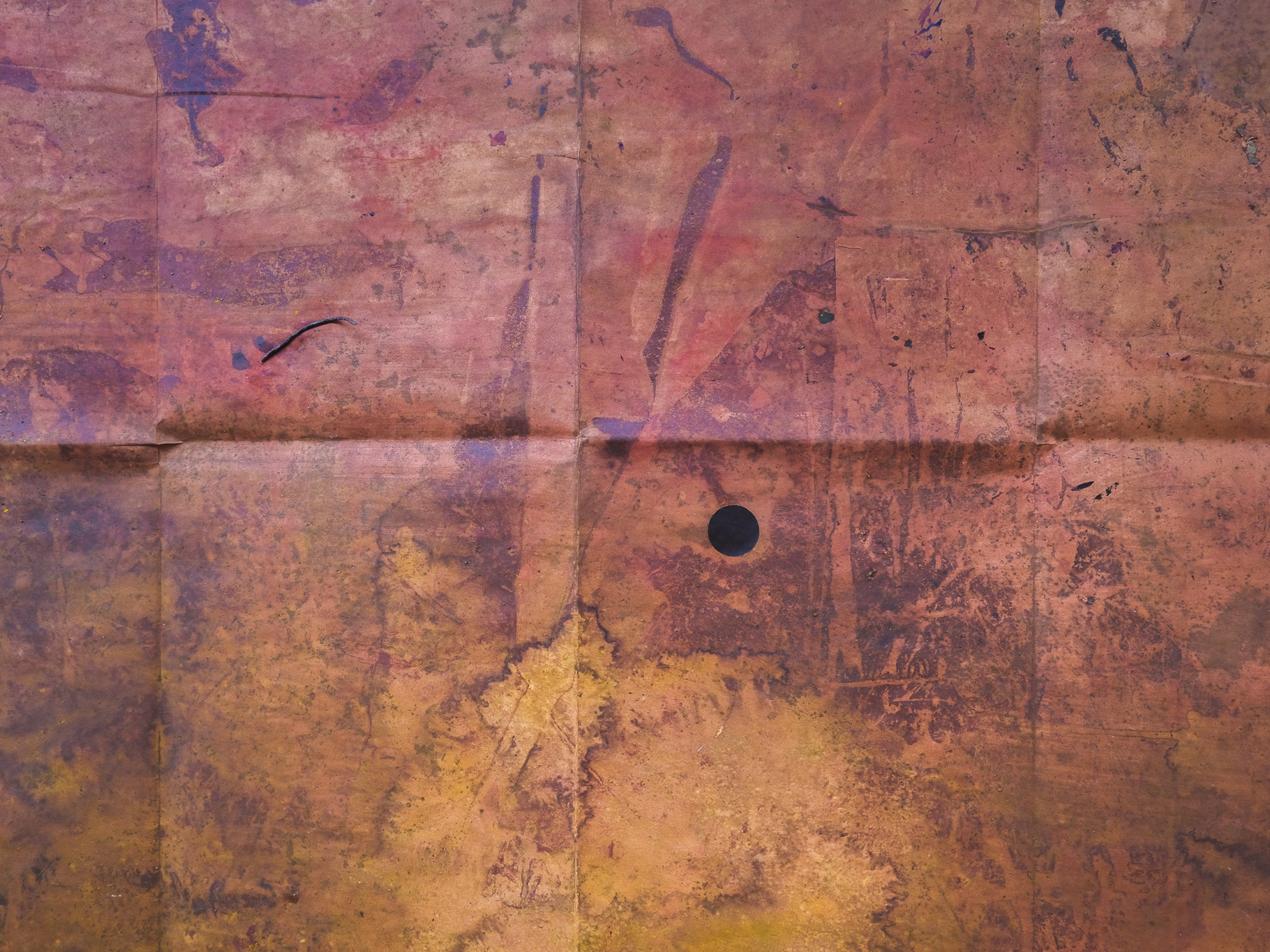
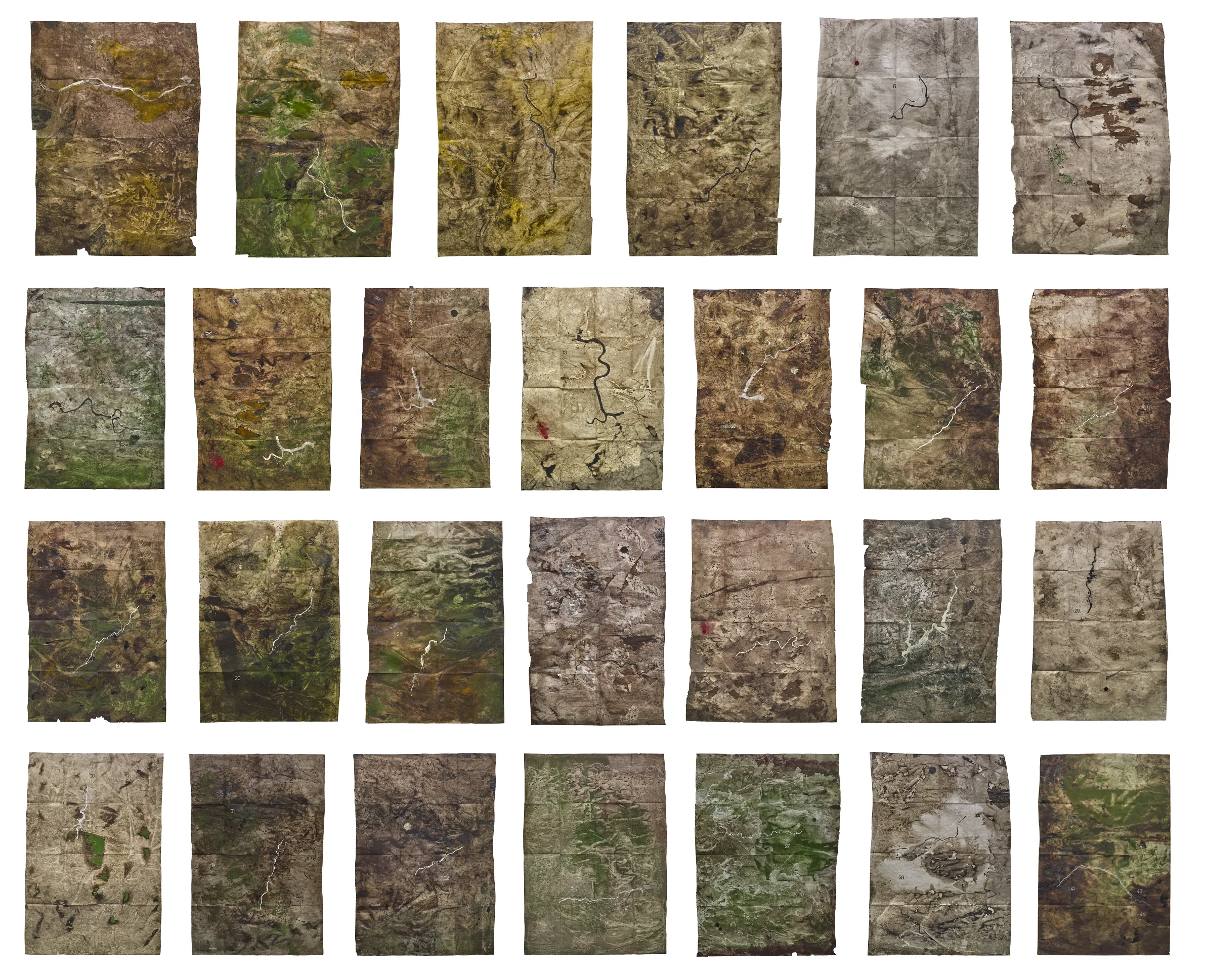
The concept of “vertical landscape” emerges as a contemporary approach to the representation and experience of territory. Traditionally, landscape has been conceived from a horizontal perspective, linked to the gaze of an observer contemplating the horizon. Vertical landscape, however, introduces a new way of looking at and representing space: an aerial, top-down vision, similar to that offered by satellites and modern cartographic technologies.
This vertical perspective moves away from the subjective, direct experience of the artist or walker, and instead approaches an external, almost machinic gaze that observes the territory from an abstract distance. In contemporary painting, this translates into works that—although they may be abstract—evoke satellite or cartographic views, where territory becomes a surface to be read rather than a scene to inhabit. Details such as the inclusion of symbolic elements (for example, suns of different sizes) reinforce this idea of multiple viewpoints and scales.
Vertical landscape thus represents a renewal in the way we understand and depict territory, shifting the centrality of the human observer and opening the field to new forms of perception and spatial analysis.